

Trucking Congestion, Part 1: The $128 Billion Traffic Jam
November 20, 2026Trucking Congestion, Part 2: No Quick Fixes
Reducing Traffic Congestion Takes Time and Strategy
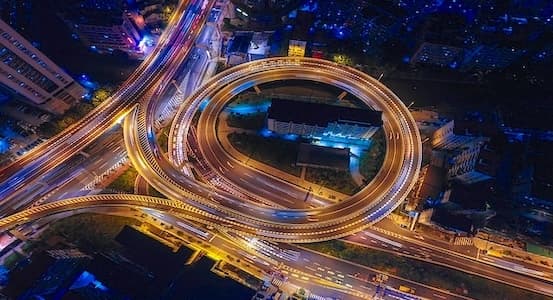
Major interchanges can take a decade to rebuild. Until the work is done, a good plan is the best way through.
Last time we looked at what congestion costs the trucking industry: $128.2 billion in 2024, according to ATRI. This week brings the harder question: how do you fix it?
The honest answer is slowly. Reducing traffic congestion takes more than adding a lane here and there, because demand keeps climbing. Demand keeps climbing. The U.S. Department of Transportation projects that freight tonnage will grow about 1.2% a year through 2050, year after year, on roads that are already crowded. Trucks already carry 65% of it and will stay the main way goods move. Every new warehouse, subdivision, and distribution center adds traffic to roads that were often designed decades ago.
The fixes take years. Chicago’s Jane Byrne Interchange, where three interstates meet, is a good example. Reconstruction began in 2013 and wasn’t finished until December 2022. It was supposed to cost $535 million and wrap up in 2017. The final bill came to about $806 million. The payoff was real, though. Illinois has had the nation’s top truck bottleneck before, and the Jane Byrne no longer ranks in the top 25.
Bridges, tunnels, and major interchanges follow the same pattern. Planning, funding, and construction can stretch across a decade, and the work zones slow traffic while they’re open. Relief does come, but on a long timeline.
What does that mean for freight in the meantime? Strategy matters as much as horsepower. Knowing where construction is, when bottlenecks peak, which bridges have restrictions, and how long permits take for an oversize load can be the difference between a smooth delivery and a costly delay. It also means planning further ahead and working with partners who track those changes every day.
Congestion isn’t going away on its own, and it won’t be solved overnight. The roads will get better one project at a time. Until then, the best way through traffic is a plan built for it.